

CEREBRAL PALSY: RESTORING BALANCE AND ENHANCING FUNCTION THROUGH AYURVEDA
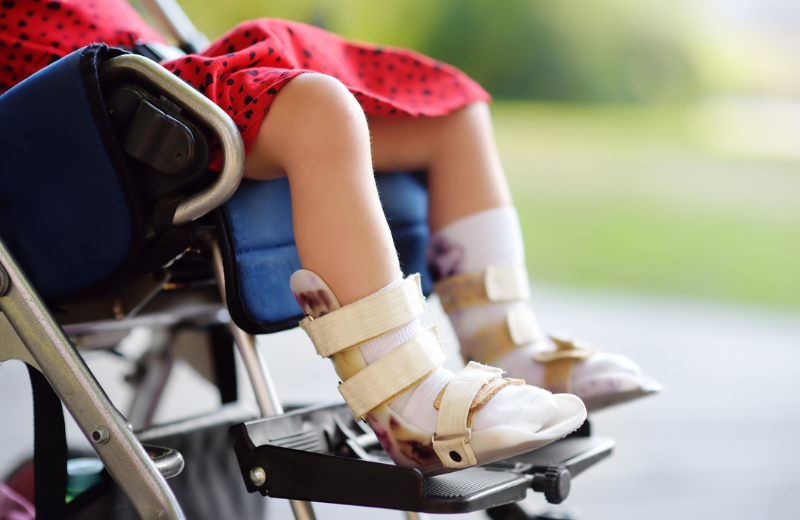
Cerebral Palsy (CP) is a group of neurological disorders that affect a person’s ability to move, control muscles, and maintain posture and balance. It occurs when the developing brain is damaged or does not form normally before birth, during delivery, or shortly after birth. The term “Cerebral” refers to the brain, and “Palsy” means muscle weakness or problems with muscle control. Together, the term describes a condition in which brain dysfunction leads to difficulties with muscle coordination and body movement.
CP is the most common motor disability in childhood and can range from mild muscle weakness to severe movement difficulties. Although it is a lifelong condition, cerebral palsy is not a progressive disease — the brain injury does not worsen over time.
Ayurvedic View of Cerebral Palsy
In Ayurveda, Cerebral Palsy is correlated with conditions classified under Vata Vyadhi, which are disorders caused by the vitiation of Vata Dosha. Vata governs the nervous system, body movements, and sensory-motor coordination. When Vata becomes imbalanced during fetal development or early childhood, it can disturb the normal growth and functioning of the brain and nervous system, leading to motor impairments, spasticity, stiffness, and developmental delays.
Vata imbalance disrupts the communication between the brain and muscles, affecting posture, balance, and mobility. While Pitta regulates metabolism and neural transformation, and Kapha provides structure and stability, disturbances in all three Doshas—particularly Vata—contribute to the physical and neurological symptoms of cerebral palsy.
Causes of Cerebral Palsy
Cerebral Palsy develops due to abnormal brain growth or brain injury before, during, or after birth. These factors affect how the brain controls movement and posture.
Prenatal (Before Birth) Causes
-
Lack of oxygen or blood flow to the fetal brain
-
Maternal infections (rubella, cytomegalovirus, toxoplasmosis)
-
Genetic mutations affecting brain development
-
Exposure to toxins or poor maternal health during pregnancy
Perinatal (During Birth) Causes
-
Birth asphyxia (oxygen deprivation during delivery)
-
Premature birth or low birth weight
-
Complicated or prolonged labour
-
Brain bleeding or trauma during delivery
Postnatal (After Birth) Causes
-
Brain infections such as meningitis or encephalitis
-
Severe jaundice in newborns (kernicterus)
-
Head injury or brain haemorrhage
-
Stroke or lack of oxygen in early infancy
Types of Cerebral Palsy
Cerebral palsy is classified into different types based on how and where brain damage affects movement and muscle tone.
1. Spastic Cerebral Palsy
This is the most common type, accounting for about 70–80% of all CP cases. It occurs due to damage to the motor cortex or the pyramidal tracts, which control voluntary movement.
Key Features
-
Muscles become stiff, tight, and resist movement (spasticity).
-
Movements appear jerky.
-
Muscle tone increases when trying to move.
-
Reflexes may be exaggerated (hyperreflexia).
Subtypes of Spastic Cerebral Palsy
-
Spastic Hemiplegia: One side of the body (arm and leg) is affected. The child may have a limp and stiffness on one side.
-
Spastic Diplegia: Both legs are mainly affected. Walking is difficult due to tight leg muscles, often causing a “scissoring gait.”
-
Spastic Quadriplegia: All four limbs are involved, often with facial and oral muscle weakness. It is the most severe form.
2. Athetoid (Dyskinetic) Cerebral Palsy
This type results from damage to the basal ganglia, which control involuntary movements. It affects about 10–15% of patients.
Key Features
-
Involuntary, slow, or writhing movements, especially in hands, arms, feet, and face.
-
Movements worsen during stress or voluntary activity.
-
Fluctuating muscle tone – sometimes stiff, sometimes floppy.
-
Difficulty in speaking and swallowing due to facial muscle involvement.
-
Normal intelligence is common, but communication challenges may occur.
Subtypes may include
-
Athetosis – Slow, continuous, writhing movements, especially in the hands and feet
-
Chorea – Rapid, irregular, dance-like movements that appear unpredictable
-
Dystonia – Repetitive, twisting movements that may cause abnormal postures
-
Rigidity – Persistent muscle stiffness and resistance to movement
3. Ataxic Cerebral Palsy
This type is caused by injury to the cerebellum, the part of the brain responsible for controlling balance and coordination. It accounts for approximately 5–10% of all cases.
Key Features
-
Poor coordination and balance (ataxia).
-
Unsteady gait and difficulty in fine motor tasks like writing or buttoning clothes.
-
Tremors during voluntary movements (intention tremor).
-
Trouble with precise movements and depth perception.
-
Speech may sound shaky or uneven (ataxic dysarthria).
4. Mixed Cerebral Palsy
Some children show symptoms of more than one type due to widespread brain damage. The most common combination is spastic and athetoid.
Key Features:
-
Both stiff and involuntary movements.
-
Variation in muscle tone (some muscles are tight, others loose).
-
Difficulties with posture, balance, and coordination.
-
Often associated with moderate to severe functional limitations.
5. Hypotonic Cerebral Palsy
A rare form of cerebral palsy caused by injury to the cerebellum or central nervous system pathways responsible for muscle tone.
Key Features:
-
Low muscle tone (floppiness) – limbs feel soft and loose.
-
Poor head and trunk control makes it difficult to sit or stand.
-
Delayed motor milestones such as crawling and walking.
-
Weak reflexes and limited movement strength.
-
Over time, it may evolve into spastic or mixed forms.
Classification of Cerebral Palsy by Body Involvement
Cerebral palsy can also be classified based on which parts of the body are affected by muscle stiffness, weakness, or movement problems.
-
Monoplegia: Only one limb is affected, usually an arm or a leg.
-
Diplegia: Both legs are mainly affected, often causing walking difficulties. Arm movement may be mildly limited.
-
Hemiplegia: One side of the body (arm and leg) is affected, opposite to the side of the brain injury.
-
Triplegia: Three limbs are affected — usually both legs and one arm.
-
Quadriplegia: All four limbs are affected, often with trunk and facial muscle involvement.
-
Double Hemiplegia: All four limbs are involved, but one side is more severely affected than the other.
Classification of Cerebral Palsy Based on Severity
Cerebral palsy can vary greatly in its severity and impact on daily function. To understand the level of independence and ability, it is commonly classified using three standardised systems:
1. Gross Motor Function Classification System (GMFCS)
This system classifies movement and mobility.
-
Level I: Walks without limitations.
-
Level II: Walks with minor limitations on uneven surfaces or long distances.
-
Level III: Walks using a hand-held mobility aid.
-
Level IV: Limited self-mobility; may use powered mobility.
-
Level V: Transported in a manual wheelchair; very limited voluntary control.
2. Manual Ability Classification System (MACS)
This system assesses how children with CP handle objects in daily activities.
-
Level I: Handles objects easily and successfully.
-
Level II: Handles most objects but with reduced speed or quality.
-
Level III: Handles objects with difficulty; needs help to prepare or modify activities.
-
Level IV: Handles limited objects; requires continuous assistance.
-
Level V: Does not handle objects and depends fully on others.
3. Communication Function Classification System (CFCS)
This system classifies everyday communication performance.
-
Level I: Effective sender and receiver with both familiar and unfamiliar partners.
-
Level II: Effective but slower-paced communication with all partners.
-
Level III: Effective communication mainly with familiar partners.
-
Level IV: Inconsistent sender and/or receiver, even with familiar partners.
-
Level V: Seldom effective communication, even with familiar partners.
Clinical Symptoms of Cerebral Palsy
Cerebral Palsy presents a wide range of symptoms depending on the area and extent of brain injury.
1. Problems with Movement and Coordination
The most common and defining feature of cerebral palsy is difficulty in voluntary motor control.
Children may show:
-
Lack of coordination (ataxia) during actions like reaching, grasping, or walking.
-
Stiff or tight muscles (spasticity) that limit joint movement and flexibility.
-
Involuntary, jerky, or writhing movements make tasks like eating, dressing, or writing difficult.
-
Trouble maintaining posture and performing smooth, controlled movements.
2. Abnormal Muscle Tone
CP affects muscle tone, resulting in either excessive stiffness or looseness:
-
Hypotonia (low tone): Muscles appear soft and floppy with poor resistance.
-
Hypertonia (high tone): Muscles feel rigid, restricting movement and flexibility.
3. Delayed Motor Development
Motor milestone delays are early indicators of cerebral palsy:
-
Late achievement of sitting, crawling, standing, or walking.
-
Difficulty with transitions, such as rolling over or standing up.
-
Poor balance and coordination during voluntary movements.
4. Abnormal Gait Patterns
Many children with CP exhibit distinct gait abnormalities due to muscle imbalance and spasticity:
-
Toe-tip walking from calf tightness.
-
Scissoring gait, where the legs cross while walking.
-
Uneven step length or asymmetrical limb movement.
5. Balance and Postural Instability
Children often struggle with maintaining posture and stability:
-
Unsteady walking or frequent falls.
-
Weak trunk and core muscles leading to poor postural balance.
-
Difficulty adjusting to changes in position.
6. Persistent Primitive Reflexes
Certain infant reflexes persist beyond infancy, disrupting normal motor control:
-
Moro reflex (startle)
-
Palmar grasp reflex
-
Tonic neck reflex
Persistence of these reflexes hinders coordinated, voluntary movements.
7. Speech and Swallowing Difficulties
Oral-motor dysfunction commonly affects communication and feeding:
-
Dysarthria: Slurred or unclear speech.
-
Dysphagia: Difficulty swallowing, choking, or drooling.
-
Feeding challenges and prolonged mealtime duration.
8. Intellectual and Learning Challenges
Cognitive impact varies across individuals:
-
Some children have normal intelligence, while others experience learning difficulties.
-
Problems with memory, attention, and comprehension.
-
Delayed cognitive milestones affecting school performance.
9. Seizures (Epilepsy)
Seizures are common in certain cerebral palsy types, especially when cortical regions are affected:
-
May present as generalised or focal seizures.
-
Require neurological evaluation and anticonvulsant therapy.
10. Sensory Impairments
CP can also affect sensory processing and perception:
-
Visual issues: Strabismus, refractive errors, or cortical visual impairment.
-
Hearing loss or auditory processing disorders affect language development.
-
Altered sensation or difficulty perceiving spatial position.
11. Other Associated Symptoms
Chronic spasticity and postural abnormalities can lead to additional complications:
-
Musculoskeletal deformities such as scoliosis, hip dislocation, or joint contractures.
-
Bladder and bowel dysfunction, including incontinence or constipation.
-
Chronic pain and muscle fatigue due to prolonged stiffness and imbalance.
Diagnosis of Cerebral Palsy
Diagnosing Cerebral Palsy involves a comprehensive evaluation of a child’s movement, posture, muscle tone, and developmental progress. As symptoms may emerge gradually, a confirmed diagnosis can take months or even years.
1. Medical History and Physical Examination
The first step in diagnosing cerebral palsy is a detailed review of the child’s medical background and developmental progress.
Doctors assess:
-
Prenatal and perinatal history: Complications during pregnancy or birth, such as infections, oxygen deprivation, or premature delivery.
-
Developmental milestones: Monitoring if the child rolls over, sits, crawls, or walks at the expected ages.
-
Neurological examination: Testing reflexes, muscle tone, strength, coordination, and sensory response.
-
Clinical signs: Presence of abnormal reflexes, spasticity, tiptoe walking, uneven gait, or poor balance and posture.
This helps rule out other neurological or muscular disorders.
2. Specialist Evaluation
If developmental delays or abnormal movements are noticed, the paediatrician may refer the child to a neurologist or multidisciplinary team for further evaluation.
This includes:
-
Observation of motor control, coordination, and reflexes.
-
Cognitive and learning ability assessment.
-
Further analysis of pregnancy, delivery, and neonatal records.
-
Analysis of posture, gait, and overall motor function.
3. Brain Imaging Tests
Brain imaging identifies structural or developmental abnormalities responsible for CP.
a. MRI (Magnetic Resonance Imaging)
-
Provides high-resolution, 3D brain images using magnetic fields and radio waves
-
Detects brain injury, oxygen deprivation, or malformations
-
Safe and preferred for its accuracy
-
Young children may need mild sedation to stay still
b. CT (Computed Tomography) Scan
-
Produces cross-sectional images of the brain using X-rays
-
Identifies bleeding, skull fractures, or calcifications
-
Used when an MRI is unavailable or contraindicated
c. Cranial Ultrasound
-
Common in newborns and premature infants
-
Detects intraventricular haemorrhage or white matter damage
-
Fast, safe, and non-invasive
4. Functional and Neurological Tests
To confirm diagnosis and exclude similar disorders, the following tests may be used:
-
EEG (Electroencephalogram): Monitors brain activity to detect epilepsy or seizure patterns.
-
EMG (Electromyogram) and Nerve Conduction Studies: Evaluate muscle and nerve communication efficiency.
-
Blood and Genetic Tests: Identify metabolic or hereditary causes of movement abnormalities.
5. Developmental and Behavioural Assessments
Specialists track a child’s motor and sensory development to understand the extent of functional impairment.
They assess:
-
Achievement of motor milestones (rolling, sitting, walking)
-
Persistence of primitive reflexes beyond infancy
-
Balance, coordination, and fine motor skills
-
Speech, hearing, and visual function
Early identification supports timely therapy and improved long-term outcomes.
Early Signs Parents May Notice
Parents are often the first to recognise developmental red flags, such as:
-
Stiff or floppy muscle tone
-
Delay in sitting, crawling, or walking
-
Favouring one hand or side of the body
-
Poor head control
-
Persistent infant reflexes
-
Difficulty swallowing, drooling, or delayed speech
If any of these signs appear, prompt consultation with a pediatric neurologist is essential to confirm the diagnosis and begin early intervention.
Treatment of Cerebral Palsy in Maurya Ayurveda
At Maurya Ayurveda, we offer a specialised integrative treatment approach for Cerebral Palsy, focusing on improving motor abilities, reducing spasticity, and enhancing overall quality of life.
Role of Ayurvedic Treatment for Cerebral Palsy
1.Podi Kizhi
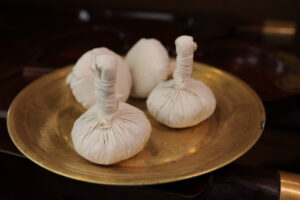
Podikizhi is an Ayurvedic sudation therapy using heated herbal powders tied in a cloth pouch (kizhi). At our hospital, Kolakulathadi Choornam is used, and each session lasts 30–45 minutes.
Benefits of Podi Kizhi in Cerebral Palsy
-
Reduces spasticity
-
Eases muscle stiffness
-
Relieves muscle spasms
-
Helps reduce muscle weakness by improving circulation
-
Reduces associated pain
2. Udwartanam in Cerebral Palsy
Udwartanam is an Ayurvedic dry herbal powder massage done with vigorous upward strokes. This therapy helps improve muscle tone, blood circulation, nerve function, and coordination in individuals with Cerebral Palsy.
Benefits of Udwartanam for Cerebral Palsy
-
Improves muscle tone
-
Enhances blood circulation
-
Supports nerve function
-
Improves coordination and motor control
-
Reduces stiffness
-
Helps improve mobility
3. Nadi Swedam in Cerebral Palsy
Nadi swedam is a localised Ayurvedic steam therapy where medicated steam is directed onto specific body parts using a tube (nadi). It helps relax tight muscles, reduce stiffness, and ease spasticity. At our hospital, Dashamoola Kashayam is used to generate the steam, and each session lasts 10–20 minutes.
Benefits of Nadi Swedam for Cerebral Palsy:
-
Reduces muscle stiffness
-
Lowers spasticity
-
Helps muscle relaxation
-
Reduces associated pain
-
Supports better mobility
4. Nasya Therapy in Cerebral Palsy
Nasya is a classical Ayurvedic therapy where medicated oils, herbal powders, or herbal juices (Swarasa) are administered through the nasal passages. It is a key part of both Shodhana (purificatory) and Shamana (palliative) treatments and is especially beneficial in neurological, developmental, and upper respiratory disorders.
Procedure of Nasya in Cerebral Palsy
-
The child is placed in a supine position with the head slightly tilted back for proper nasal opening.
-
A mild facial massage is performed to relax facial muscles.
-
Gentle steam or warm fomentation is applied to improve nasal absorption.
-
Medicated oils like Anu Taila or Ksheerabala Taila are instilled in controlled doses into each nostril.
-
A gentle nasal massage is done after administration.
-
The child rests for a few minutes to allow deeper penetration of the medication.
-
The procedure is usually done once daily based on age, weight, and neurological needs.
Benefits of Nasya in Children with Cerebral Palsy
-
Improves neural coordination and enhances motor control.
-
Increases cognitive functions such as attention span, memory, and response.
-
Reduces spasticity, facial muscle tension, and upper airway stiffness.
-
Supports speech development and improves oral-motor functions.
-
Enhances sensory integration, especially in visually and auditorily delayed children.
-
Promotes calmness, emotional regulation, and better sleep.
5. Elakizhi for Cerebral Palsy (CP)
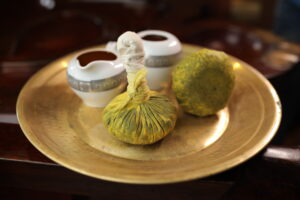
Elakizhi (Patra Potali Swedana) is a therapeutic Ayurvedic fomentation using warm herbal boluses. Fresh medicinal leaves are sautéed in medicated oil, tied into cloth bundles, heated, and applied to the body with rhythmic massage strokes. This therapy helps loosen tight muscles, improve circulation, and support overall neuromuscular function in individuals with cerebral palsy.
Benefits of Elakizhi in CP
- Reduces muscle stiffness and spasticity
- Improves blood circulation and neuromuscular activity
- Supports better coordination and balance
- Enhances muscle relaxation, easing physiotherapy and stretching
- Promotes calmness and reduces stress
- Helps reduce pain from spasms, tightness, or postural strain
6. Thalapothichil in Cerebral Palsy
Thalapothichil, also known as Shiro Lepa, is a traditional Ayurvedic treatment in which a medicated herbal paste is applied over the scalp. It is widely used in various neurological, developmental, and psychological conditions.
Procedure of Thalapothichil
-
Scalp is first anointed with medicated oil, commonly Ksheerabala Taila, to improve circulation and prepare the scalp.
-
A freshly prepared herbal paste is applied evenly over the scalp and shaped into a dome.
-
A small depression is made at the top and filled with medicated oil or buttermilk to enhance the cooling effect.
-
The paste is then covered with a banana leaf to maintain therapeutic temperature and improve absorption.
-
The patient is allowed to rest for 30–45 minutes while the paste calms and stabilises the nervous system.
-
After the session, the paste is gently removed, and the scalp is cleaned.
Herbal Ingredients Used in Thalapothichil
The paste used for Thalapothichil is typically prepared using:
-
Amla (Phyllanthus emblica) – Rich in antioxidants; supports brain nourishment.
-
Mustha (Cyperus rotundus) – Calming, helps regulate Vata and improve sensory processing.
-
Usheera (Vetiveria zizanioides) – Cooling, grounding, and stabilising for neurological imbalances.
-
Kachura (Curcuma zedoaria) – Anti-inflammatory, improves scalp circulation and neural function.
-
Rasnadi Choornam – Helps relieve heaviness, improves nerve conductivity.
-
Curd – Provides a soothing base and helps maintain optimum paste consistency and cooling effect.
Benefits of Thalapothichil in Cerebral Palsy
- Improves cognitive and mental functions
- Reduces muscle spasticity
- Enhances sensory integration
- Promotes better sleep and relaxation
7. Shirodhara in Cerebral Palsy
Shirodhara is a classical Ayurvedic therapy in which a continuous, gentle stream of warm medicated oil or buttermilk is poured onto the forehead for 30–60 minutes. At our hospital, the preferred medicated oil is Ksheerabala Thailam. This therapy is typically performed in adult patients with Cerebral Palsy.
Procedure of Shirodhara
-
The patient lies comfortably on a massage table.
-
Lukewarm Ksheerabala Thailam is poured in a steady stream over the forehead, especially over the “third eye” (Ajna Chakra) area.
-
The continuous flow is maintained for 30–60 minutes in a calm, relaxing environment.
-
The therapy helps calm the nervous system, improve mental focus, and enhance neurophysiological function.
-
After the session, the oil is gently removed from the forehead.
-
The scalp may be cleaned with warm water or an herbal decoction.
Benefits of Shirodhara in CP
- Enhances nervous system function and neural coordination.
- Improves sensory integration and cognitive function.
- Promotes better sleep and reduces anxiety and stress.
- Assists in pain management due to spasticity, muscle spasms, or joint issues.
Role of Physiotherapy in Cerebral Palsy
Physiotherapy helps improve mobility, reduce muscle stiffness, enhance coordination, and promote independence. The physiotherapy program includes targeted exercises that improve muscle tone, posture, strength, balance, and daily functional skills.
1. Passive Range of Motion (PROM)
PROM helps maintain joint flexibility and reduce stiffness, especially in children with high muscle tone.
Exercises typically used include
-
Wrist flexion and extension
-
Shoulder flexion and extension
-
Hip abduction and adduction
-
Knee flexion and extension
-
Ankle dorsiflexion and plantarflexion
فوائد
-
Prevents contractures
-
Improves joint mobility
-
Reduces stiffness
-
Helps maintain muscle elasticity
2. Active Range of Motion (AROM)
AROM encourages the child to actively move each joint, improving muscle activation and control.
Exercises commonly included
-
Arm raises
-
Leg kicks
-
Ankle pumps
-
Finger and wrist flexion–extension
-
Hip abduction–adduction
-
Trunk twists
فوائد
-
Improves motor control
-
Enhances circulation
-
Increases joint flexibility
-
Strengthens muscles involved in movement
3. Active-Assisted Range of Motion (AAROM)
AAROM is performed when the child can move partially but needs assistance to complete the movement.
Exercises used in therapy include
-
Assisted shoulder flexion
-
Assisted elbow flexion–extension
-
Assisted wrist and finger movements
-
Assisted hip flexion–extension
-
Assisted knee flexion–extension
-
Assisted ankle dorsiflexion–plantarflexion
فوائد
-
Encourages muscle activation
-
Improves movement patterns
-
Reduces stiffness and spasticity
-
Enhances functional ability
4. Orthotic Support (Orthoses)
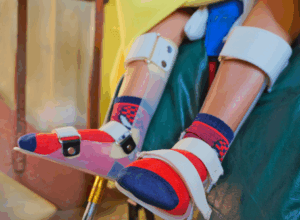
Orthoses are customised devices used to support posture, prevent deformity, and improve walking patterns.
Common Orthoses in CP
-
AFO (Ankle Foot Orthosis): Controls foot-drop, improves walking alignment
-
KAFO (Knee Ankle Foot Orthosis): Helps with standing, knee stability, and walking in severe weakness
فوائد
-
Improves gait stability
-
Prevents joint contracture
-
Supports proper alignment
5. Strengthening Exercises
Strengthening is essential to improve the child’s ability to sit, stand, walk, and perform daily activities.
Common strengthening methods include
Resistance Training
-
Resistance band exercises
-
Leg press
-
Biceps curls
Core Strengthening
-
Planks
-
Seated trunk rotations
Weight-Bearing
-
Modified push-ups
-
Supported standing
Functional Strengthening
-
Sit-to-stand training
-
Step-up activities
Isometric Training
-
Wall push-ups
-
Leg press holds
Postural Strengthening
-
Scapular retraction
-
Back extension exercises
فوائد
-
Improves mobility
-
Enhances stability and posture
-
Reduces spasticity
-
Promotes joint alignment
-
Increases muscle strength
6. Balance and Coordination Training
CP affects both static and dynamic balance, so these exercises aim to improve stability and movement planning.
Balance Training
-
Heel-to-toe walking
-
Weight shifting
-
Single-leg standing
-
Tandem stance
Core and Coordination Work
-
Seated trunk twists
-
Clapping tasks
-
Ball catching and throwing
-
Obstacle navigation
-
Tapping targets at different heights
Dynamic Balance Tasks
-
Step-ups
-
Walking on a line or beam
-
Marching
-
Figure-8 walking
Function-Oriented Training
-
Sit-to-stand practice
-
Picking objects from various heights
فوائد
-
Improves stability and postural control
-
Enhances motor coordination
-
Supports safe walking and daily activities
7. Gait Training
Gait training helps improve walking mechanics, safety, and endurance.
Techniques used
-
Treadmill or supported treadmill walking.
-
Walking with assistive devices (walker, cane, parallel bars)
-
Heel-to-toe walking
-
Surface variation walking (soft, hard, uneven surfaces)
-
Step-up and step-down training
-
Side-stepping for lateral stability
فوائد
-
Improves stride quality
-
Enhances balance during walking
-
Increases endurance
-
Promotes independence in mobility
8. ADL (Activities of Daily Living) Training
Therapists help children improve skills needed for home, school, and community participation.
Training includes
-
Feeding and self-care tasks
-
Dressing and grooming skills
-
Use of adaptive tools (grip utensils, bathing chairs)
-
Wheelchair mobility
-
Safe transfer training (bed, chair, toilet)
فوائد
-
Increases independence
-
Reduces caregiver burden
-
Improves confidence and quality of life
9. Manual Therapy
Manual therapy techniques reduce stiffness and improve mobility.
Common techniques include
-
Deep tissue massage
-
Myofascial release
-
Joint mobilization
-
Manual stretching
فوائد
-
Reduces stiffness and discomfort
-
يحسن الدورة الدموية
-
Enhances relaxation
-
Maintains joint range of motion
Role of Speech Therapy in Cerebral Palsy
Speech therapy is a key component of rehabilitation for children with Cerebral Palsy. Many children with CP experience difficulties with speech, communication, oral motor control, and swallowing. Speech therapy helps improve communication skills, feeding safety, and overall quality of life.
Key Benefits of Speech Therapy for Children with Cerebral Palsy
1. Improves Speech Clarity
Children with CP often have challenges with articulation due to weak or uncoordinated oral muscles. Speech therapy helps improve:
-
Sound production
-
Tongue and lip movement
-
Breath support
This results in clearer, more understandable speech.
2. Enhances Language Skills
Language development may be delayed in CP. Therapists use:
-
Storytelling
-
Vocabulary building
-
Sentence formation activities
to strengthen both expressive and receptive language skills.
3. Strengthens Voice Control
Voice difficulties such as low volume, poor pitch, or breathy speech are common. Voice therapy focuses on:
-
Breath control
-
Vocal training
-
Improving pitch, tone, and loudness
4. Helps Manage Fluency Problems
Stuttering and dysfluency can occur due to muscle tension or poor coordination. Speech therapy promotes:
-
Slow, relaxed speech
-
Rhythmic breathing techniques
-
Reduced communication anxiety
5. Treats Oral Motor Weakness and Swallowing Issues
Many CP types—especially spastic quadriplegic and dyskinetic CP—affect chewing and swallowing. Speech therapy improves:
-
Lip, jaw, and tongue strength
-
Safe swallowing (reducing choking risk)
-
Chewing patterns
-
Saliva control
This is essential for safe feeding, better nutrition, and preventing aspiration.
6. Introduces AAC (Augmentative & Alternative Communication)
For children with severe speech limitations, AAC tools help them communicate effectively. This may include:
-
Picture exchange systems
-
Symbol boards
-
Speech-generating devices
-
Communication apps
AAC gives children the ability to express needs, emotions, and ideas independently.
7. Boosts Confidence and Social Participation
As speech and communication improve, children with CP become more confident in:
-
School
-
Social interactions
-
Daily activities
-
Community participation
Role of Acupuncture and Acupressure in Cerebral Palsy
Acupuncture and acupressure are increasingly recognised as effective complementary therapies in the management of Cerebral Palsy. These techniques help reduce muscle stiffness, improve motor coordination, support neurological balance, and enhance overall physical and emotional well-being.
Acupuncture Techniques Used in Cerebral Palsy Treatment
1. Body Acupuncture (Systemic Acupuncture)
This method uses fine, sterile needles inserted into specific acupoints to restore energy flow and improve both physical and neurological function.
Common Acupuncture Points Used in CP
-
LI4 (Hegu): Relieves pain and promotes muscle relaxation
-
GB34 (Yanglingquan): Supports motor function and improves muscle tone
-
ST36 (Zusanli): Enhances immunity, digestion, and overall vitality
-
LV3 (Taichong): Helps emotional regulation and relaxation
-
DU20 (Baihui): Supports cognitive development and brain functions
-
BL15 (Xinshu): Aids emotional and nervous system balance
-
GB21 (Jianzhongshu): Relieves muscle stiffness and tension
These acupoints help regulate the nervous system, reduce muscle tension, and improve daily functional performance.
Benefits of Acupuncture in Cerebral Palsy
Acupuncture stimulates specific points in the body to:
-
Reduce spasticity and muscle tightness.
-
Improve nerve function and brain-body coordination.
-
Enhance motor control and balance.
-
Support emotional and cognitive well-being.
-
Reduce pain and discomfort.
-
Improve sleep and overall relaxation.
2. Electro-Acupuncture
Electro-acupuncture involves delivering mild electrical stimulation between acupuncture needles. It is particularly beneficial for children experiencing spasticity, tight muscles, and motor coordination difficulties.
Benefits of Electro-Acupuncture in CP
-
Reduces spasticity
-
Improves motor function
-
Enhances nerve stimulation
-
Improves muscle coordination and balance
-
Reduces pain
-
Promotes better voluntary movement
Electro-acupuncture is frequently integrated with physiotherapy to enhance overall rehabilitation outcomes.
Role of Acupressure in Cerebral Palsy
Acupressure uses gentle manual pressure on acupoints instead of needles, making it safe and comfortable for younger children or individuals sensitive to acupuncture.
Benefits of Acupressure in Cerebral Palsy
-
Enhances relaxation.
-
Reduces muscle tension and stiffness.
-
Supports digestion and sleep.
-
Helps regulate emotional responses.
Safety Consideration
While full needle acupuncture is suitable for adults, pediatric patients with cerebral palsy require modified, gentle techniques to ensure safe and effective treatment.
Through this holistic blend of Ayurveda, Physiotherapy, Speech Therapy, and Acupuncture, we aim to provide comprehensive support that helps each achieve their highest potential.
DISCLAIMER: The information provided in this article is intended solely for educational purposes. Treatment decisions should be made exclusively by a well-qualified Ayurvedic physician. Self-medication is strongly discouraged.
Maurya Ayurveda Hospital, opposite to Sabine Hospital, Pezhakkapilly P.O, Muvattupuzha, Ernakulam; PIN:686673, Contact no:9947183000
Email: info@mauryaayurveda.com
مركز ماوريا أيورفيدا لتقويم العظام وإعادة التأهيل العصبي (مستشفى الأيورفيدا)