


RESTORE MOBILITY AND COMFORT: AYURVEDA FOR RHEUMATOID ARTHRITIS
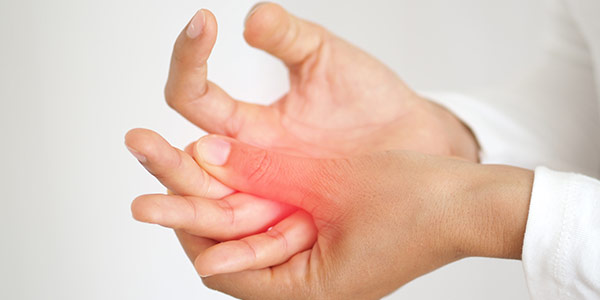
Rheumatoid Arthritis (RA) is a chronic autoimmune disease in which the immune system mistakenly attacks the lining of the joints (synovium). This leads to persistent inflammation, pain, swelling, and stiffness. If left untreated, rheumatoid arthritis can cause joint damage, deformities, and long-term disability.
In some cases, the disease may also affect other organs, including the heart, lungs, and eyes.
Ayurvedic View of Rheumatoid Arthritis
In Ayurveda, Amavata is described as a chronic inflammatory joint disorder that is closely correlated with Rheumatoid Arthritis (RA) in modern medicine.
Causes of Amavata (Nidana)
- Viruddhahara – consumption of incompatible, heavy, or oily foods
- Viruddhachesta – unhealthy lifestyle habits and improper daily activities
- Mandagni – weak digestive fire leading to poor digestion
- Nishchalata – sedentary lifestyle and lack of physical activity
Major Triggering Factor
- Exercising immediately after consuming Snigdha Ahara (oily or heavy food) causes rapid formation of Ama.
Pathogenesis of Amavata
- Weak digestion (Mandagni) leads to the formation of Ama(Toxins) in the stomach and intestines.
- Ama combines with vitiated Vata Dosha and circulates throughout the body.
- The Ama–Vata complex localises in Kapha-dominant areas (Shleshma Sthana) such as the joints, bones, and muscles.
- This process further disturbs Pitta Dosha, resulting in an imbalance of Vata, Pitta, and Kapha.
Common Symptoms of Amavata
- Joint pain
- Morning stiffness
- Joint swelling
- Fatigue and weakness
- Mild fever
Symptoms of Rheumatoid Arthritis
Rheumatoid arthritis symptoms usually develop gradually and commonly affect joints on both sides of the body (symmetrical involvement).
Early Symptoms of Rheumatoid Arthritis
- Joint pain and tenderness
- Swelling in the hands, wrists, feet, and ankles
- Morning stiffness lasting more than one hour
- Fatigue and general weakness
- Low-grade fever
- Loss of appetite
Advanced Symptoms of Rheumatoid Arthritis
- Persistent and severe joint swelling
- Reduced range of joint movement
- Joint deformities, especially in fingers and wrists
- Formation of rheumatoid nodules
- Chronic pain and stiffness
- Inflammation of organs such as the lungs, heart, or eyes
Diagnosis of Rheumatoid Arthritis
The diagnosis of rheumatoid arthritis is based on a detailed clinical evaluation along with laboratory and imaging tests. Early diagnosis helps prevent joint damage and improves treatment outcomes.
Physical Examination
During the physical exam, the doctor checks for:
- Joint swelling, warmth, and tenderness
- Symmetry of affected joints (both sides of the body)
- Duration and severity of symptoms
- Range of joint movement and stiffness
Blood Tests for Rheumatoid Arthritis
Blood tests help identify inflammation and specific antibodies linked to rheumatoid arthritis, including:
- Rheumatoid Factor (RF)
- Anti-Cyclic Citrullinated Peptide (Anti-CCP) antibodies
- Erythrocyte Sedimentation Rate (ESR)
- C-Reactive Protein (CRP)
Elevated ESR and CRP levels indicate inflammation, while RF and Anti-CCP antibodies support the diagnosis of RA.
Imaging Tests for Rheumatoid Arthritis
Imaging studies are used to detect joint inflammation and damage:
- X-rays to identify bone erosion and joint damage
- Ultrasound to detect early joint inflammation
- Magnetic Resonance Imaging (MRI) for detailed evaluation of soft tissues and early changes
These tests help assess disease progression and guide treatment planning.
Types of Rheumatoid Arthritis
There are three primary types of rheumatoid arthritis, classified based on blood test results and age of onset. They are seropositive RA, seronegative RA, and juvenile idiopathic arthritis (JIA).
1. Seropositive RA
Seropositive RA occurs when blood tests reveal the presence of rheumatoid factor (RF) or anti-CCP antibodies.
- This form of RA is generally more severe and may lead to:
- Progressive joint damage and deformities
- Rheumatoid nodules under the skin
- Vasculitis (inflammation of blood vessels)
- Lung and organ complications
Early diagnosis and treatment are crucial to prevent long-term disability.
2. Seronegative RA
Seronegative RA presents RA symptoms despite negative RF and anti-CCP tests. Although standard blood tests are negative, the immune system may still produce antibodies that are not routinely detected. Compared to seropositive RA, this type is usually less aggressive.
Common symptoms include:
- Joint pain and swelling
- Morning stiffness
- Reduced joint mobility
3. Juvenile Idiopathic Arthritis (JIA)
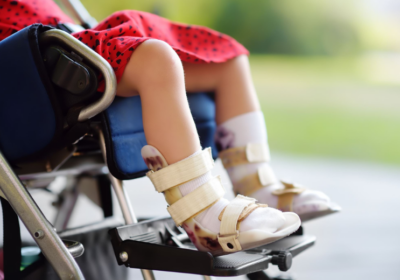
Juvenile Idiopathic Arthritis (JIA) affects children and adolescents aged 17 and younger.
Symptoms may include:
- Joint inflammation and stiffness
- Persistent fever
- Skin rashes
- Swollen lymph nodes
Differential Diagnosis of Rheumatoid Arthritis
Several conditions can mimic rheumatoid arthritis and should be considered in the differential diagnosis.
1. Osteoarthritis
Pain worsens with activity, minimal morning stiffness, involves DIP(Distal Interphalangeal) joints. RA is inflammatory with prolonged stiffness.
2. Psoriatic Arthritis Associated with psoriasis
Occurs in patients with psoriasis, causes asymmetric arthritis, dactylitis(diffuse swelling of an entire finger or toe), and nail pitting. RA lacks skin and nail changes.
3. Systemic Lupus Erythematosus (SLE)
Causes non-erosive arthritis with malar rash and multisystem involvement; ANA positive, whereas RA typically causes erosive joint disease.
4. Sjögren Syndrome
Characterised by dry eyes and mouth, arthralgia, parotid enlargement, and anti-SSA/SSB positivity. RA primarily presents with joint inflammation.
5. Polymyalgia Rheumatica (PMR)
Causes pain and stiffness in the shoulders, neck, and hips, with elevated ESR/CRP and rapid steroid response. RA commonly affects small hand joints.
6. Fibromyalgia
Causes widespread musculoskeletal pain, fatigue, and poor sleep, with normal laboratory results and no joint swelling. RA shows objective inflammatory signs.
7. Gout and Pseudogout
Presents as acute monoarthritis with severe pain, redness, and swelling, confirmed by crystal identification on joint aspiration. RA is a chronic, symmetric polyarthritis.
8. Lyme Disease
Causes migratory arthritis, often involving the knee, associated with tick exposure, and confirmed by positive serology. RA is autoimmune, chronic, and persistent.
9. Viral Arthritis
Presents with acute symmetric arthritis after a recent viral infection, and is usually self-limiting. RA is progressive and chronic.
At Maurya Ayurveda, Rheumatoid Arthritis is treated through an integrated approach combining Ayurveda, Physiotherapy, Acupuncture, and Yoga for holistic healing.
Role of Ayurveda in Rheumatoid Arthritis (Amavata)
Ayurvedic treatment focuses on Ama Pachana (digestion and metabolism of toxins), Agni Deepana (strengthening digestive fire), Vata pacification, and joint rejuvenation through a structured combination of internal and external therapies.
Internal therapies
1. Langhana (Light Diet and Fasting Therapy)
Procedure:
Langhana is administered in the form of Laghu Ahara, such as thin rice gruel (Peya), vegetable soups, or controlled therapeutic fasting based on the patient’s strength and disease condition. Heavy, oily, cold, and incompatible foods are strictly avoided.
Benefits:
- Digests and eliminates Ama
- Improves digestive fire (Agni)
- Reduces joint swelling and heaviness
- Prevents further disease progression
2. Tikta, Katu, and Deepana Medicines
Procedure:
Medicines possessing bitter (Tikta) and pungent (Katu) tastes, along with Deepana properties, are administered orally to stimulate digestion and metabolise accumulated Ama.
Benefits:
- Enhances digestion and metabolism
- Reduces inflammation (Shotha)
- Relieves joint pain (Shoola)
- Clears obstructed channels (Srotoshodhana)
3. Snehapana (Internal Oleation Therapy)
Snehapāna is indicated only in the Nirāma stage (absence of Āma) and contraindicated in the Āma stage.
Procedure:
Medicated ghee or oils are given orally in gradually increasing doses under strict medical supervision.
Benefits:
- Pacifies aggravated Vata Dosha
- Nourishes joints and body tissues
- Reduces dryness, stiffness, and rigidity
- Improves joint flexibility and mobility
4. Virechana Karma in Amavata
Virechana Karma is a controlled therapeutic purgation that eliminates vitiated Pitta Doṣha along with Āma. By cleansing the gastrointestinal tract, it corrects impaired Agni and enhances systemic metabolism.
Indications of Virechana in Amavata:
- Chronic or stabilised stage of Amavata
- After completion of Āma-pācana and Rūkṣaṇa therapies
- Presence of inflammatory features such as swelling, heat, or fever
- Adequate digestive strength (Madhyama or Pravara Agni)
Effects of Virechana in Amavata:
- Reduces systemic and joint inflammation
- Decreases joint oedema and tenderness
- Improves digestion and appetite
5. Basti Therapy in Amavata
Basti is a therapeutic enema in Ayurveda, in which medicated oils or decoctions are administered through the rectal route. It is the most important Panchakarma therapy for Amavata, as Vāta Dosha is the chief causative factor in this disease. Basti directly acts on the Pakvāśaya (colon), the main seat of Vāta, and produces both local and systemic therapeutic effects.
Mechanism of Action of Basti:
- Acts through the Pakvāśaya to regulate Apāna Vāta
- Eliminates deeply seated Āma from the body
- Restores the normal movement of Vāta Doṣha
- Nourishes joints, muscles, and connective tissues
Effects of Basti in Amavata:
- Relieves joint pain and morning stiffness
- Reduces swelling and inflammation
- Improves joint mobility and function
External treatments
1. Podi Kizhi (Choorna Pinda Sweda)
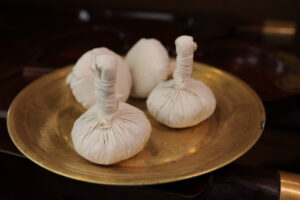
Podi Kizhi is a traditional Ayurvedic sudation therapy (Swedana) in which heated herbal powders are tied into a cloth pouch (Kizhi) and applied over affected joints. In our hospital, Kolakulathadi Choornam is commonly used for preparing the Kizhi. This therapy is particularly effective in Rheumatoid Arthritis, where joint stiffness, pain, and restricted movements are prominent.
Procedure:
- Medicinal herbal powder is tied into a cotton cloth to form a bolus.
- The bolus is heated to a comfortable temperature.
- The warm Kizhi is gently pressed and rubbed over affected joints in rhythmic movements.
- The treatment duration is 30–45 minutes.
Benefits:
- Reduces joint pain and stiffness
- Improves mobility and flexibility of joints
- Enhances blood circulation
- Pacifies aggravated Vata dosha
- Relieves muscular rigidity and swelling
2. Baluka Swedam (Sand Fomentation)
Baluka Swedam is a dry heat therapy in which clean sand is heated and tied in a cloth bundle (Potli).
Procedure:
Heated sand is tied in a cloth pouch and applied over affected joints, ensuring a comfortable temperature. It is mainly used in the chronic stage of rheumatoid arthritis.
Benefits:
- Relieves pain and stiffness
- Improves circulation
- Reduces muscle spasm
- Enhances joint mobility
3. Dhanyamla Dhara
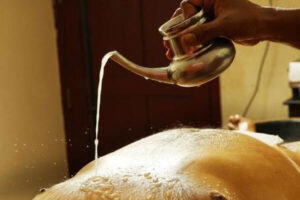
Dhanyamla Dhara is a specialised Ayurvedic therapy in which a warm, fermented herbal liquid (Dhanyamla) is poured continuously over the affected joints or limbs. It is highly beneficial in Vata–Kapha predominant Amavata, especially during inflammatory stages.
Procedure:
- Warm Dhanyamla is poured in a steady, rhythmic stream over the affected joints or limbs.
- The pouring is continued for 30–45 minutes.
- The gentle warmth allows deep penetration of medicinal properties.
Benefits:
- Reduces joint inflammation and swelling
- Relieves pain and stiffness
- Improves circulation to affected joints
- Helps in Ama Pachana locally
- Provides soothing and relaxing effect
4. Lepam (Herbal Paste Application)
Lepam is an external Ayurvedic therapy in which a warm medicated herbal paste is applied over inflamed joints. In Rheumatoid Arthritis, Lepam is effective for controlling pain, swelling, and tenderness.
At Maurya Ayurveda, Grahadoomadi Choornam or Rasnadi Choornam is commonly used.
Procedure:
- The herbal powder is mixed with medicated liquid to form a paste.
- The paste is gently warmed and applied in a thick layer over affected joints.
- It is retained for 20 to 30 minutes. Once dried, it is removed using warm water.
Benefits:
- Anti-inflammatory and analgesic action
- Reduces joint swelling and tenderness
- Pacifies Vata and Kapha locally
- Improves joint comfort and function
5. Upanaham (Medicated Poultice Therapy)
Upanaham is an Ayurvedic poultice therapy involving the application of medicinal paste along with herbal leaves and bandaging. It is especially beneficial in chronic Rheumatoid Arthritis, where pain, stiffness, and nerve irritation persist.
Procedure:
- A medicated paste is applied over the affected joint (commonly wrists, knees, or ankles).
- The area is covered with medicinal leaves.
- The joint is then bandaged securely.
- The poultice is retained for a prescribed duration as advised by the physician.
Benefits:
- Relieves chronic joint pain and stiffness
- Reduces inflammation and swelling
- Improves joint stability
- Provides sustained Vata pacification
- Enhances local tissue nourishment
Role of Physiotherapy in Rheumatoid Arthritis
Physiotherapy in rheumatoid arthritis focuses on pain relief, reducing inflammation, slowing disease progression, preventing disability, and improving functional ability. It includes physical modalities, exercise therapy, and self-management strategies.
1. Cold and Heat Therapy
Procedure:
Cold therapy is applied during acute flare-ups to reduce swelling and pain, while heat therapy is used in the chronic phase or before exercise to decrease stiffness.
Benefits:
- Reduces joint pain and inflammation
- Improves mobility and comfort
- Supports participation in daily activities
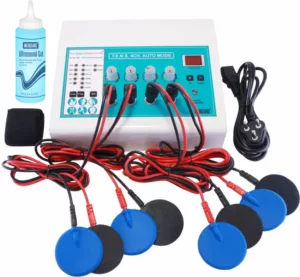
2. Transcutaneous Electrical Nerve Stimulation (TENS)
Procedure:
Electrodes are applied around painful joints to deliver low-frequency electrical impulses for pain relief.
Benefits:
- Non-invasive pain management
- Reduces reliance on medication
- Improves comfort during daily activities
3. Manual Therapy and Massage
Procedure:
Therapeutic massage and gentle manual joint mobilisation are performed within pain-free ranges to affected joints and surrounding soft tissues.
Benefits:
- Enhances joint flexibility
- Reduces pain and muscle tension
- Improves joint function and circulation
4. Joint Protection Techniques
Procedure:
Patients are educated on proper body mechanics, joint-saving techniques, activity pacing, and the use of splints or assistive devices.
Benefits:
- Prevents joint stress and deformity
- Maintains functional independence
- Reduces fatigue and pain
5. Exercise Therapy
a. Acute Phase Exercises
Procedure:
Isometric or static exercises to maintain muscle strength without stressing inflamed joints.
Benefits:
- Maintains muscle strength
- Prevents muscle wasting
- Protects inflamed joints
b. Stretching Exercises (Chronic Phase)
Procedure:
Gentle stretching is introduced once inflammation subsides.
Benefits:
- Improves flexibility and range of motion
- Prevents contractures
- Reduces stiffness
c. Strengthening Exercises
Procedure:
Low-resistance, controlled strengthening exercises based on patient tolerance.
Benefits:
- Increases muscle support around joints
- Enhances stability and function
- Improves daily activity performance
d. Aerobic Conditioning Exercises
Procedure:
Moderate to high-intensity aerobic exercises like walking, cycling, or swimming.
Benefits:
- Improves cardiovascular fitness
- Reduces fatigue
- Boosts endurance and overall well-being
Role of Acupuncture in Rheumatoid Arthritis
Acupuncture can be used as a supportive treatment in Rheumatoid Arthritis (RA) to reduce symptoms and improve the quality of life.
Acupuncture works by stimulating specific acupoints, which promote the release of endorphins, improve blood circulation, and modulate immune and inflammatory responses.
Indications:
- Chronic or stable Rheumatoid Arthritis
- Persistent joint pain despite medication
- As an adjunct to physiotherapy, Ayurveda, and Yoga
Benefits:
- Decreases joint pain
- Reduces morning stiffness
- Improves mobility of joints
- Helps in reducing inflammation
- Improves overall functional ability
Commonly Used Acupoints in RA:
- LI4 (Hegu) – Pain relief
- LI11 (Quchi) – Reduces inflammation
- ST36 (Zusanli) – Immunomodulation and energy enhancement
- SP6 (Sanyinjiao) – Joint and systemic balance
- GB34 (Yanglingquan) – Benefits tendons and joints
- Local points around the affected joints
Yoga for Rheumatoid Arthritis
Yoga for Rheumatoid Arthritis should be gentle, controlled, and pain-free, preferably practised during remission phases. All Asanas must be performed slowly and within a pain-free range to avoid joint strain.
General Guidelines
- Avoid yoga practice during acute flare-ups
- Movements should be slow, controlled, and comfortable
- No force or pressure should be applied on inflamed joints
- Always practice under professional guidance
- End every session with relaxation or meditation
1. Warm-Up and Joint Mobilisation
- Gentle movements of fingers, wrists, elbows, ankles, and toes
- Performed slowly without applying pressure
Benefits:
- Reduces joint stiffness
- Improves blood circulation
- Prepares joints and muscles for further yoga practice
2. Asanas (Yoga postures)
Recommended Asanas for RA include;
a. Trikonasana (Triangle pose)
- Improves balance and flexibility
- Strengthens lower-limb muscles
b. Shalabhasana (Locust Pose)
- Strengthens back, hip, and gluteal muscles
c. Vakrasana (Spinal Twist Pose)
- Enhances spinal mobility and aids digestion
d. Padmasana (Lotus Pose)
- Promotes relaxation and improves joint flexibility
Hold each posture for a few seconds with normal breathing.
3. Pranayama (Breathing Exercises)
Performed after asanas in a relaxed sitting position.
a. Anulom-Vilom
- Practice slow alternate-nostril breathing to calm the nervous system and improve oxygenation.
b. Mild Kapalabhati
- Perform gently to enhance metabolism and reduce fatigue
Avoid forceful breathing, especially during active inflammation.
4. Meditation
- Practice for at least 20 minutes daily
- Focus on breath awareness or guided meditation
- Helps reduce stress, anxiety, and pain perception
Improves mental well-being and sleep quality
5. Relaxation
- End the session with Shavasana or guided relaxation
- Allow complete physical and mental relaxation
- Aids muscle recovery and reduces fatigue
This comprehensive treatment approach helps reduce pain and inflammation, improve joint mobility, slow disease progression, and enhance overall quality of life in Rheumatoid Arthritis patients.
DISCLAIMER: The information provided in this article is intended solely for educational purposes. Treatment decisions should be made exclusively by a well-qualified Ayurvedic physician. Self-medication is strongly discouraged.
Maurya Ayurveda Hospital, opposite to Sabine Hospital, Pezhakkapilly P.O, Muvattupuzha, Ernakulam; PIN:686673, Contact no:9947183000
Email: info@mauryaayurveda.com
Maurya Ayurveda Ortho & Neuro Rehabilitation Centre ( Ayurveda Hospital )